

The Orange Whip swing trainer was not something I bought to fix my back. I bought it because a friend at the course kept swinging one before his round and said it loosened him up. That sounded good enough. What I did not expect was for it to become the reason I can still walk the back nine without stopping to stretch at every tee box.
For context, my back has been the cranky member of my golf game for about ten years. I am 62, a retired shop teacher from Rochester, Minnesota, and I play twice a week from May through October at a public course, walking with a push cart and carrying a mid-teens handicap. The routine used to go like this: drive to the course, feel the lower back tighten on the ride, play the front nine okay, then spend the back nine trying to stand up straight between shots.
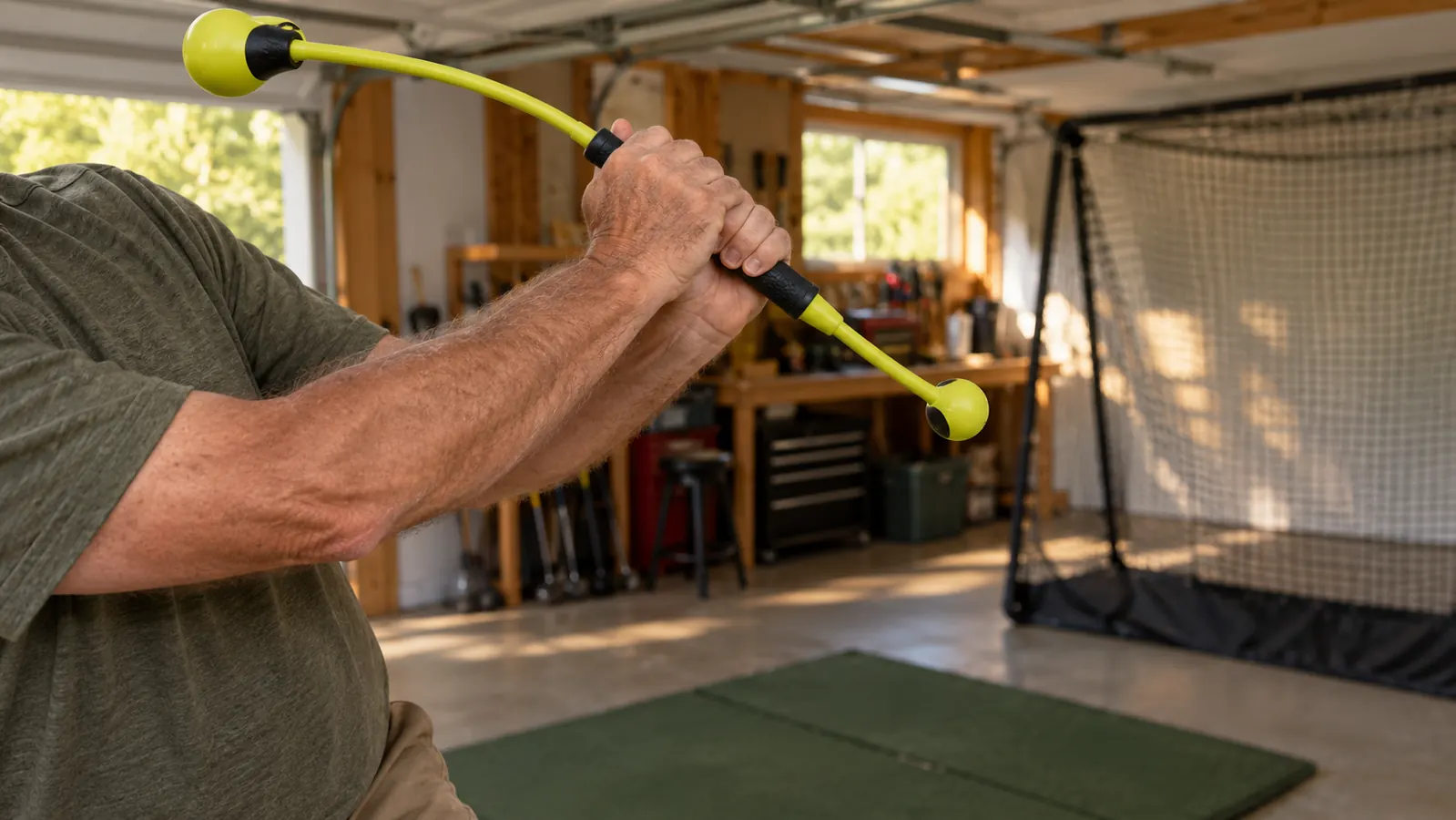
The worst part was the range. Hitting a bucket of balls with my old swing was a guaranteed way to spend the evening on the couch with a heating pad. I tried stretching. I tried shorter swings. I tried a heavier club. Some of it helped a little. None of it changed the basic problem, which was that my body had learned to start the downswing with my shoulders instead of letting the swing happen in sequence.
That is the part nobody tells you. The Orange Whip does not look like much when you first pull it out of the box. It is a trainer, not a club, and it asks you to swing it the way you would swing a real club, except the weight is out at the end and the shaft flexes as you move. If you start the swing with your shoulders, the whip tells on you right away. You feel it in your hands and forearms, and you feel your lower back trying to brace.
The first few sessions were humbling. The trainer wants a full turn and a full release, and I had spent years cutting both short to protect my back. So I slowed everything down. I swung it like I had all the time in the world, let the weight lag behind, and let the shaft load up before it snapped through. It felt strange for about a week. Then it started to feel like the way a golf swing is supposed to feel.
The whip tells on you right away if you start the swing with your shoulders. You feel it in your hands, and you feel your lower back trying to brace.
Loosen up before the first tee.
The same trainer I keep in my garage and take to the course. Check today's price on Amazon and see if it earns a spot next to your bag.
Amazon Check Today's Price on Amazon →After about three weeks of using it most days, I noticed something on a Tuesday round in July. I walked off the 18th green, loaded the push cart into the car, and realized I had not done a single one of my between-hole stretches. That had not happened in years. My back was not pain-free, and I want to be straight with you about that. It was stiff by the end of the round, the way any back is stiff after three hours of golf. But it was not the grinding, brace-every-swing ache I had gotten used to.
I think the reason is simple. The trainer slows the swing down and makes you feel the order of things: the turn, the drop, the release. When the weight is out at the end of a flexible shaft, you cannot force it. You either swing in sequence or you fight it. My shoulders stopped leading the downswing because the trainer made it uncomfortable for them to lead. My back stopped taking the punishment because it was no longer the thing holding the whole swing together.
I am not a doctor or a physical therapist, and I am not going to pretend to be one. If your back pain is sharp, or radiating, or numb, go see a professional. That is real advice, not a disclaimer. What I can tell you is what worked for a 62-year-old weekend golfer with a stiff, achy lower back and thirty years of bad habits.
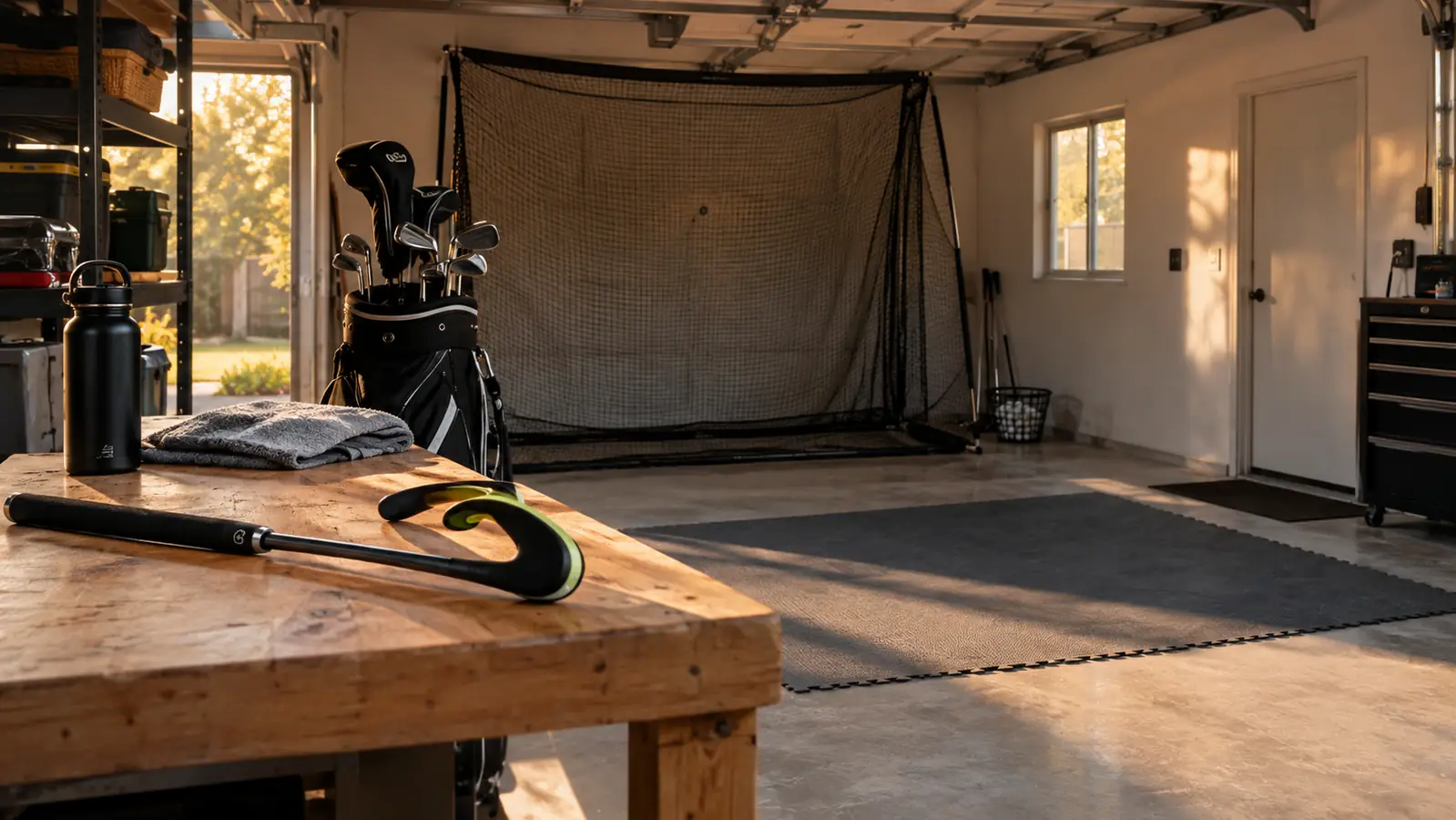
The other thing that surprised me was how much I use it at home. The garage has a hitting net and a foam mat, and most evenings I take ten minutes to swing the trainer while Linda walks the dog. Birdie, our yellow Lab puppy, thinks the whole thing is a game, but she has learned to sit and watch. Ten minutes of slow, sequenced swings before dinner does more for my back than the static stretching I used to do.
I also found myself reaching for it on the days I was not playing. On a rainy afternoon, or after a long drive home from visiting the grandkids, ten minutes with the Orange Whip is the difference between a stiff evening and a decent one. It is not exercise in the way a workout is exercise. It is more like reminding your body how to move, and my body seems to appreciate the reminder.
What I'd Tell You If We Were Sitting at My Kitchen Table
Here is the honest version. The Orange Whip is not a cure-all, and I am not going to tell you it fixed my back, because it did not. What it did was give me a way to practice the swing without beating myself up, and a warm-up I actually do instead of one I skip. If you are a golfer in your fifties or sixties with a back that tightens up on the back nine, I would tell you to try one and use it for two weeks before you judge it. Swing it slowly. Feel the release. Let your back be the passenger instead of the engine. And if it does not help you, that is useful information too, because at least you will know.
Try it the way I did: ten minutes in the garage, two weeks before you judge it.
Check today's price on Amazon and see if it earns a spot next to your bag.
Amazon Check Today's Price on Amazon →