

The first time I noticed it, I was standing over a six-footer on the 14th hole and I could not get into my stance. My lower back had tightened into a knot somewhere around the turn, and by the back nine it was dictating every shot I took. I'm Gary Lindquist, 62, a retired high school shop teacher from Rochester, Minnesota. I've played golf for 30 years, and for the last ten of those I've done it with a stiff, achy lower back that tightens up on long drives to the course, flares after a bucket of range balls, and generally makes the game I love feel like a punishment.
I've tried the usual fixes. Anti-inflammatories before the round, heat patches, more stretching, less stretching, a different car seat cushion. Some of it helped around the edges. None of it kept my back from seizing up on the 13th tee. So last season I added one more tool, the Sparthos back brace, and I used it the way I used a clamp in the shop: not to hold a joint together forever, but to hold it steady while I did the work. It didn't fix my back, and I'm not going to tell you it did. What it did was keep my back quiet long enough for me to play a full round again. Here's the exact routine I settled on, step by step, in case it helps you.
The specific problem, if you know it, is hard to describe to people who don't play. It's not a sharp pain, not the kind of thing that sends you to the emergency room. It's a deep, achy stiffness that settles into your lower back around the 10th or 11th hole. You can still swing, but you swing careful. You protect instead of attack. For a weekend golfer like me, that's the difference between a good round and a grind. More importantly, it's the difference between loving the back nine and just surviving it.
The brace I reach for before every round
The Sparthos back brace supports the lower back through the ride, the swing, and all 18 holes without getting in the way. It's the one I put on at the house before I load the clubs.
Amazon Check Today's Price on Amazon →Before I walk you through the steps, a word about what this brace actually does. The Sparthos is a lumbar support that wraps around your lower back and gives your spine something to work against. It doesn't move vertebrae, it doesn't fix a herniated disc, and it won't undo years of bad posture. What it does is take some of the load off the muscles that hold your lower back together, so they don't have to do it all on their own.
I'm not a doctor or a physical therapist, and I don't pretend to be one. I'm a retired shop teacher who got tired of his back ruining his rounds. So take what follows as one golfer's practical routine, not medical advice. If your back pain is sharp, or radiates down a leg, or goes numb, talk to a professional before you buy anything. This routine is for the everyday stiffness that makes golf hard, not for a serious injury.
Once I understood that the brace was a support tool and not a cure, I stopped expecting magic from it and started using it deliberately. The routine below is the result of a full season of trial and error. I've broken it into five steps, in the order I actually do them, with the mistakes I made the first time noted so you don't have to make them yourself.
Step 1: Put It On Before the Car Ride, Not at the First Tee
For me, the trouble starts in the car, not on the course. The public course I play is a 40-minute drive from the house, and a bucket seat is the worst possible place for a cranky lumbar spine. You sit with your hips tilted, your back rounded, and the road vibration doing no one any favors. I used to arrive stiff, walk to the first tee already tight, and spend the front nine trying to loosen up. By the time I felt right, the round was half over.
Now I put the Sparthos on at the house, over a thin base layer, before I load the clubs in the trunk. It holds my lower back in a better position through the drive, and I get to the course feeling like I've been standing, not sitting. That sounds small, but it changed the first hour of my round. I walk to the first tee loose instead of tight, and I'm ready to swing on the first hole instead of the fourth.
The lesson is to use the brace as a preventative, not a rescue. If you wait until your back is already angry and you're standing on the first tee, you're playing catch-up all day. Put it on before the ride, and you start the round ahead. That one change in timing did more for me than any pill, patch, or ointment I tried.
Step 2: Set the Tension for a Swing, Not a Corset
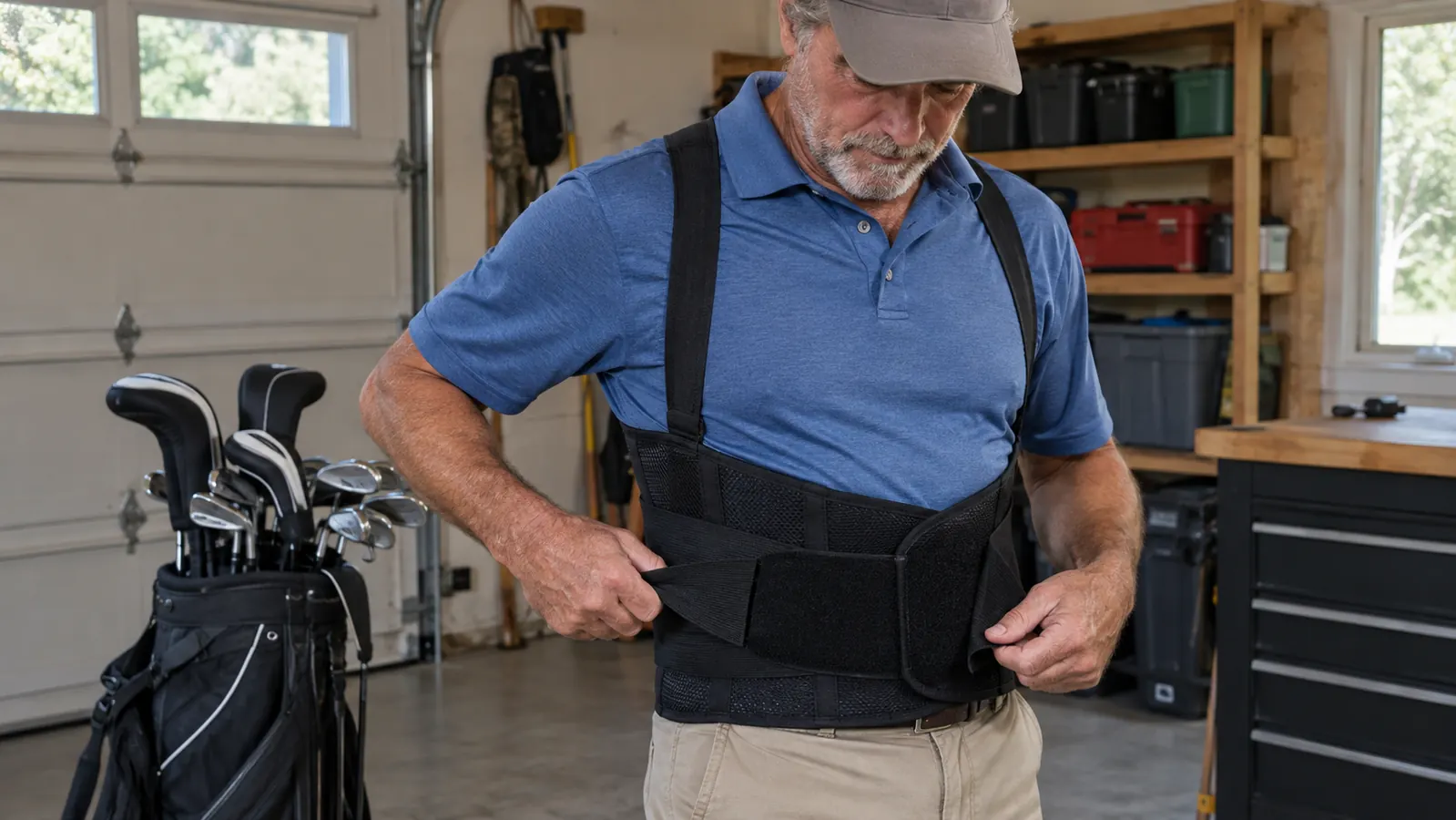
The first time I wore the Sparthos, I made the classic mistake: I pulled it as tight as I could. It felt great standing in the garage. It felt terrible on the first tee, because I could not rotate. A back brace that locks you down will protect your spine and ruin your swing at the same time. You'll stand over the ball, try to turn, and feel like you're wearing a cast.
The right tension is firm enough that you feel it working when you bend, but loose enough that you can take a full shoulder turn. I set mine so I can slip two fingers under the front panel. I can breathe, I can twist, and I can swing like I'm not wearing anything at all. That's the sweet spot. It took me a few rounds to find it, and it's worth fiddling with in the garage before you trust it on the course.
Golf is a rotational sport. If the brace stops you from turning, you'll compensate with your hips and make everything worse. The Sparthos supports without immobilizing, and that's exactly what you want in a golf brace. Tight enough to help, loose enough to play.
Step 3: Use the Brace as a Posture Reminder Through the Front Nine
The quiet benefit of wearing the brace is that it keeps my posture honest. When I start to slump over a putt or round my shoulders at address, I feel the edge of the brace against my back and I correct. It's like having a coach tap me on the shoulder between shots. Over 18 holes, those little corrections add up to a lot less strain on the lumbar spine.
I wear it through the whole front nine, on every shot. It doesn't bunch under my golf shirt, it doesn't get in the way of my swing, and after a few holes I honestly forget it's there. That's the test of a good golf brace: you notice it when you need it, and you ignore it when you don't.
The front nine was never my problem, though. The back nine was where I fell apart. But keeping my posture honest early has meant the 13th, 14th, and 15th holes are no longer where my round goes sideways. The brace is doing its work before I even need it, and that's the whole point of wearing it for the full round instead of just the back nine.
Step 4: Re-Adjust at the Turn
No brace stays perfectly put for 18 holes of swinging. By the 9th green, mine has shifted up or twisted a little, especially if I've been in and out of the cart or reaching into the bag between shots. A brace that has moved is a brace that isn't supporting the right spot anymore, and a brace that isn't supporting the right spot is just a sweaty belt.
At the turn, I take 90 seconds to fix it. I loosen the straps, re-center it over my lumbar spine, and re-tighten to the same two-finger tension I set in the morning. That's it. It takes less time than waiting for the group ahead to clear the 10th tee.
This is the step most people skip, and it's the one that makes the biggest difference for the back nine. The turn used to be where my round fell apart. Now it's just a quick re-adjust, and I walk to the 10th tee feeling as good as I did on the first.
Step 5: Take It Off Before You Cool Down
The brace is a tool for the round, not a treatment to live in. I take mine off in the parking lot, before I load the clubs, and I never wear it on the drive home. Your back needs to do its own work, and if you wear a brace for hours after the round, you're teaching the muscles that support your spine to go soft. I noticed the difference the first season I followed this rule: my back actually felt better on the days after golf than it did when I wore the brace all afternoon.
I've read what physical therapists say about this, and the consensus is clear: use a brace for activity, not for recovery. The muscles around your lumbar spine need to stay engaged. So I walk a little after the round, do some gentle floor work on the foam mat in the garage, and let the stiffness settle on its own.
If the pain ever turns sharp, or radiates down a leg, or goes numb, that's a conversation for a doctor, not a brace. I'm not a medical professional, and I don't pretend to be one. The Sparthos handles the everyday stiffness that made golf hard. The serious stuff stays out of my garage and in the clinic.
What Else Helps
The brace is one piece of the puzzle. Three other things have made a real difference in my back, and none of them cost much. If you're dealing with the same kind of stiffness, these are worth stacking with the brace. I didn't change my whole life overnight. I just added a few small habits that keep my back moving, and they added up.
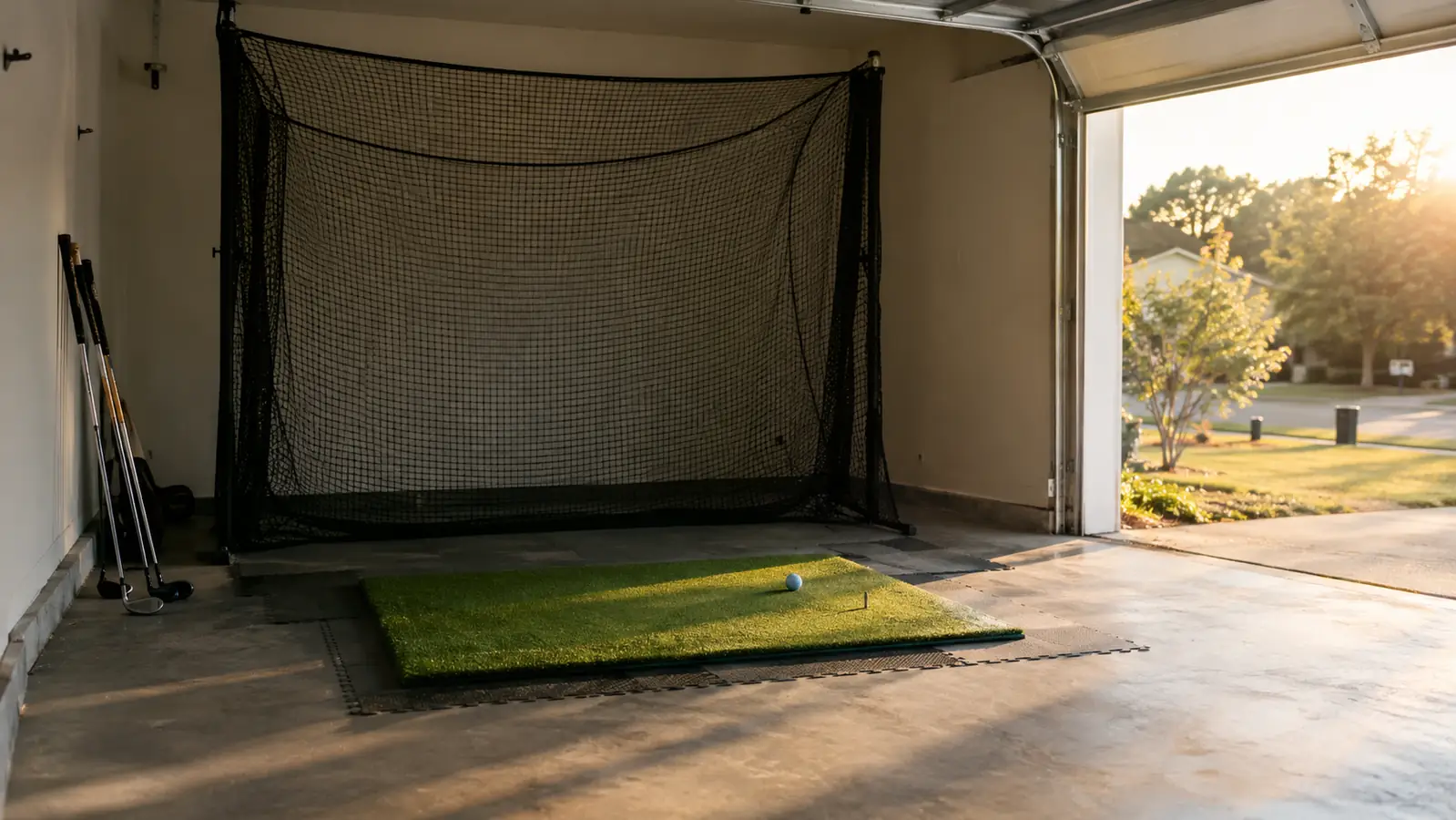
First, I set up a hitting net and a foam mat in my two-stall garage. I hit 20 or 30 balls two or three times a week, even through the winter. It keeps my swing from getting rusty and my back from getting cold and tight between rounds. A half hour of easy swings in the garage is better for my back than a full round after a week of sitting. Second, I switched from riding a cart to walking with a push cart. The movement is better for my back than sitting still for four hours, and I play better when I walk.
Third, Linda, my wife, walks nine holes with me some evenings. It's not a back treatment, but it's a good reason to move more and sit less, and it makes the game a lot more fun. Birdie, our young yellow Lab puppy, would tell you the same thing if she could talk, though she mostly just wants the exercise. Add the Sparthos to that mix, and my back has gone from the thing I dread to something I barely think about.
The turn used to be where my round fell apart. Now it's a 90-second re-adjust and I'm back out there.
If your back is costing you holes, try this one
The Sparthos back brace is the tool I reach for before every round. It supports the lower back through the ride, the swing, and all 18 holes without getting in the way. Check today's price on Amazon and see if it works for your game.
Amazon Check Today's Price on Amazon →