
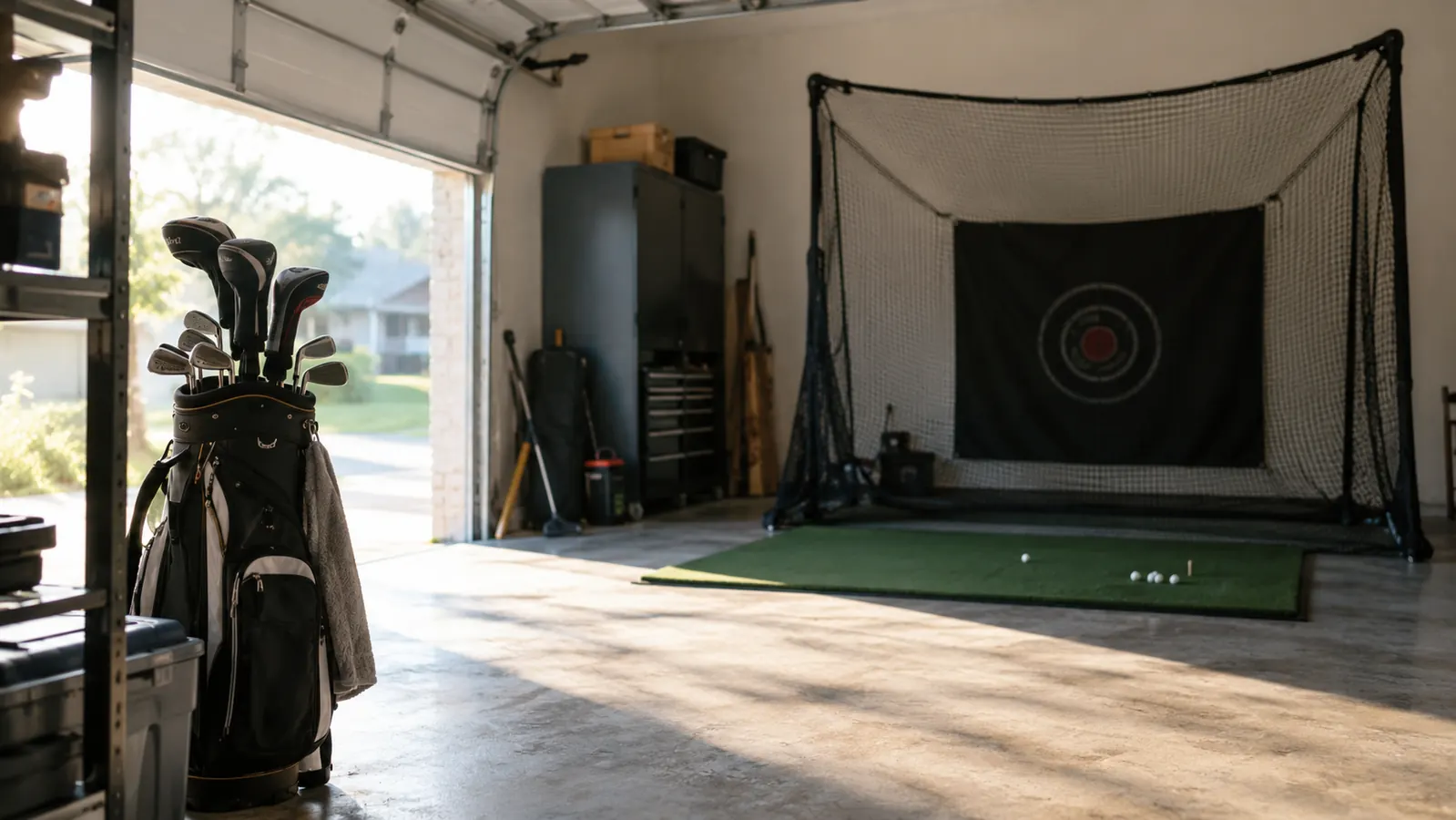
I have a cranky lower back. Ten years of it now, and if you play golf past fifty you probably know the exact feeling. You stand over the ball, start your takeaway, and the right side of your lower back reminds you it exists. You stand up, stretch, take a shorter swing, and the next hole starts the same way. I have tried a lot of answers to this problem over the years, from stretching before rounds to changing my stance. The two I want to talk about today are the Sparthos back brace and a cheap drugstore elastic brace. I have used both for a full season, and they are not the same tool.
The short answer is that they are not competing in the same weight class. The drugstore brace is fine for a stiff morning or a long car ride. The Sparthos brace is the one I reach for when I know I am swinging a club for four hours. It has more structure, more adjustability, and it stays where I put it. Here is how they actually compare after a season of using both on the course and in my garage.
Here is the short version before I get into the details.
| Sparthos Back Brace | Cheap Drugstore Brace | |
|---|---|---|
| Support | Dual-layer compression with rigid stays and adjustable straps that hold the lumbar area | Single-layer elastic band that adds warmth and mild compression |
| Fit | Multiple adjustment points, fits under or over clothes, can be snugged or loosened mid-round | One-size elastic that rolls at the waist and slips during a swing |
| Ease of use | Takes a minute to position and line up the straps | Slips on in seconds with no learning curve |
| Build quality | Reinforced stitching and stays that hold their shape | Thin elastic that loses its snap and pills after a couple of months |
| Comfort on the course | Stays flat through a full backswing and follow-through | Bunches up at the waist when you hinge forward |
| Washing | Hand wash and air dry to protect the stays | Machine washable and quick drying |
| Best for | Regular golfers with real lumbar soreness who need support that lasts a round | Occasional twinges, long drives, and people who want to try a brace without commitment |
How I Compared Them
I am 62, a retired shop teacher, and I play a public 18-hole course in Rochester, Minnesota about twice a week from May through October. My lower back tightens up on long drives to the course and usually announces itself again on the back nine. I tested the Sparthos brace for a full season, and I bought a drugstore elastic brace the same week so I could compare them honestly.
Most of my testing happened on the hitting net in my garage. I would hit fifty balls into the net with one brace, take a break, then hit fifty with the other. The net does not lie about what a brace does during a swing. I also wore both on the course with my push cart, walking the full eighteen and paying attention to when each one started to bother me.
My wife Linda walked nine holes with me some evenings and gave me her honest opinion on which one looked less ridiculous and which one seemed to keep me from reaching for my back after every shot. Birdie, our yellow Lab puppy, chewed the corner of the drugstore one, which tells you something about its durability. I am not a doctor or a physical therapist. If your back pain is sharp, radiating, or numb, see a professional. What I can tell you is how these two braces behave when a 62-year-old with a stiff lumbar region swings a golf club.
What a Back Brace Actually Does for a Golf Swing
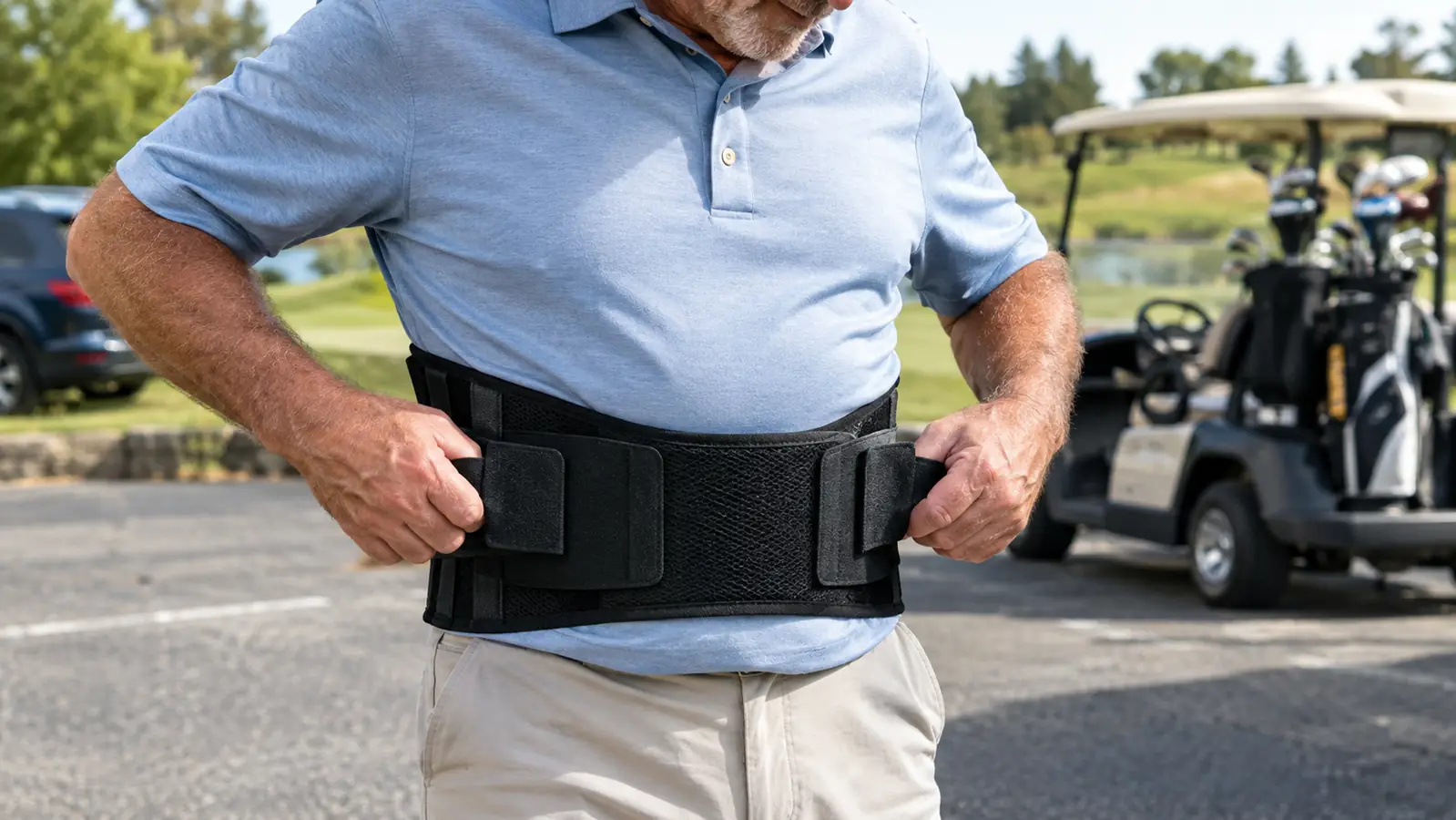
A back brace does not fix a bad back. It adds compression and warmth to the lower back, and it gives your body a physical reminder to keep your midsection braced during the swing. For a golfer, that reminder is useful. The golf swing is a twisting motion, and if your lumbar region is stiff, you will compensate by changing your posture and likely make things worse.
The difference between a good brace and a cheap one is how it handles that twist. A good brace holds its position and keeps even tension across your lower back as you rotate. A cheap brace shifts, bunches, or rolls at the waist, which means you are either stopping to fix it or you are wearing it too loose so it stays put. That is the core difference I found between the Sparthos and the drugstore brace.
Fit and Sizing: Where They Differ Most
Fit is the biggest practical difference between these two braces. The drugstore brace is a one-size elastic tube. It goes on easy, but it does not adjust to your body. On me, that means it sits fine when I stand straight and rolls up the moment I hinge forward to address the ball. The Sparthos has multiple adjustment points, so I can set the tension where I need it and change it during the round.
Sizing matters for another reason. A brace that is too loose does nothing, and a brace that is too tight can make your back ache in a new way. The Sparthos came in a size that fit my waist, and the straps let me fine-tune it. The drugstore brace just stretches, which means it is either too loose around the waist or too tight around the ribs. There is no middle ground.
Where Sparthos Wins
The Sparthos brace has structure. It uses a dual-layer compression design with adjustable straps that wrap around your midsection, and it includes rigid stays that keep the brace from rolling up when you bend. That matters on a golf swing. When I address the ball and hinge forward, the drugstore brace wants to bunch at my waist. The Sparthos stays flat and holds consistent tension through the whole swing.
It also stays put on the back nine. I wore it under a loose polo and over a t-shirt on cooler days, and I did not have to stop and yank it back into place. The adjustable straps mean I can set it snug for the first few holes and ease it a half-inch looser after lunch without taking it off. That kind of adjustability is the difference between a brace you wear and a brace you fight.
The build quality is the other clear win. After a season of use, the Sparthos still looks and feels the way it did in May. The straps hold their tension, the stays have not bent out of shape, and the fabric has not pilled where it rubs against my belt line. I cannot say the same for the drugstore brace, which went soft and baggy around the same time Birdie decided it was a chew toy.
Where the Drugstore Brace Wins
The drugstore brace wins on convenience and simplicity. It slips on in seconds, no straps to line up, no positioning to learn. If your back is merely stiff from the drive to the course and you want a little warmth and compression for the first few holes, it does the job. I keep mine in the car for exactly that reason.
It is also easier to wash. I threw mine in the washing machine and hung it dry, while the Sparthos needs a gentler hand wash to protect the stays. For someone who sweats through a round or wears a brace daily, that convenience is real. The Sparthos is not hard to clean, but it asks for more care than a cheap elastic band.
And it is a lot easier to replace. The elastic loses its snap after a couple of months, and the fabric pills where it rubs against a belt line. But because it costs less upfront, that does not sting the way it would on a premium brace. For someone who only needs occasional support, that trade-off makes sense. For someone swinging a club twice a week, the replacement cycle gets old fast.

What I'd Change About Each
No product is perfect, and I want to be honest about the flaws. The Sparthos brace takes longer to put on, and the straps can be fiddly if you are in a hurry. It also runs warm, which is fine on a cool morning but noticeable in July. I solved that by wearing it over a thin undershirt, but it is still the warmer option.
The drugstore brace is easier to live with day to day, but it does not do the job I need it to do on the course. It shifts, it rolls, and it loses tension quickly. I would not change the price or the simplicity, but I would change the elastic. A little more structure in the band would make it a better backup.
The drugstore brace slips on in seconds. The Sparthos brace is the one I reach for when I know I am swinging a club for four hours.
If Your Lower Back Is Costing You the Back Nine
I compared both so you do not have to. See today's price on Amazon and decide if the extra structure is worth it for your swing.
Amazon Check Today's Price on Amazon →Who Should Buy Which
Buy the Sparthos brace if you play golf regularly and your lower back tightens up on the course. If you want a brace that stays flat through a swing, adjusts as the round goes on, and still holds its shape next season, this is the one. It suits golfers who walk with a push cart, carry a bag, or spend four hours on a course and want support that does not quit on the fifteenth hole.
Buy the drugstore brace if your back only acts up on long drives or after a day of yard work, and you want something to slip on for an hour. It is also the better pick if you are not sure a brace will help you at all and you want to test the idea before committing to a proper one. Just know that you will likely replace it, and that is fine.
What I'd Tell a Fellow Golfer
If you are standing in the drugstore aisle wondering whether to spend the money on a real brace, here is my advice. Think about how often your back actually bothers you on the course. If it is every round, buy the Sparthos. If it is once a month, buy the cheap one and do not feel guilty about it.
And when you wear it, wear it consistently. A brace does its best work when you put it on before your back starts complaining, not after. I put mine on in the parking lot before the first tee. That simple habit has done more for my back than any brace on its own.
The Bottom Line
After a season of wearing both, I keep the Sparthos in my golf bag and the drugstore brace in the car for long drives. That is the honest division of labor. The Sparthos brace does the heavy lifting on the course, and the cheap one handles the moments when I just need a little warmth on my lower back.
The thing I would tell any golfer with a cranky lower back is to think about what you are actually asking the brace to do. If you need it to survive a golf swing, buy the one built for movement. If you need it to survive a car ride, the drugstore one is fine. Most of us need both, but if you can only buy one, buy the one that works where your back hurts most.
Get the Brace That Stays Put Through Your Swing
Support that lasts the whole round, not just the first few holes. Check today's price on Amazon.
Amazon Check Today's Price on Amazon →