
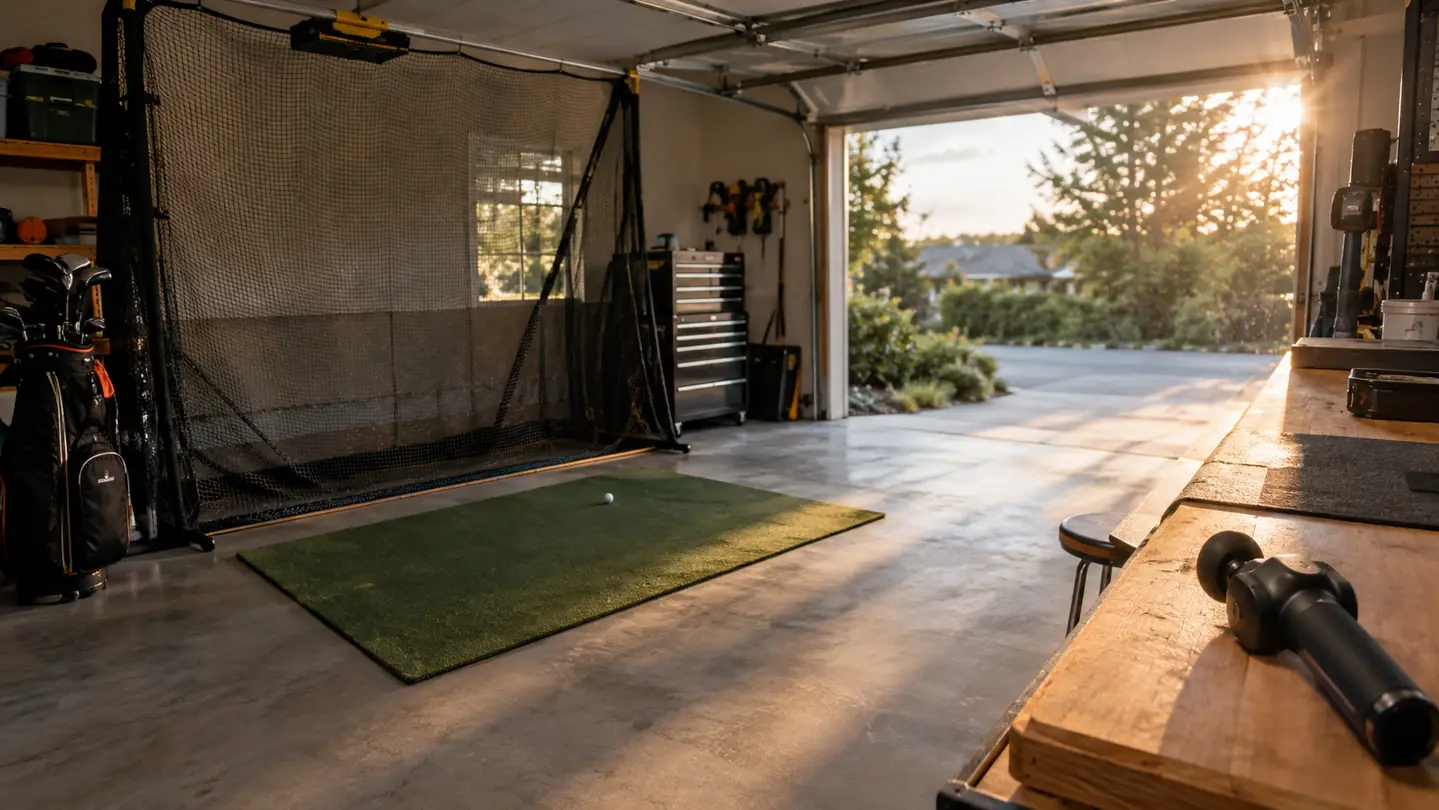
Ten years ago, my lower back started talking to me on the golf course. Not the sharp, grab-you-by-the-collar pain that sends a man to the doctor. The other kind. The dull, achy stiffness that shows up around the 12th tee, gets worse on the drive home, and is still there when I bend over to tie my shoes the next morning. I am 62 years old, I have played this game for 30 years, and I have spent the last ten of them trying to keep my lumbar from locking up in the middle of a round.
I have tried the usual things. More stretching. A better warm-up. A foam roller that lives in the garage and collects dust. All of it helped a little. What moved the needle was the TOLOCO massage gun, and not because it is magic. It is not. It is a tool, and like any tool, it works when you use it the right way. This is the routine I have settled on after months of trial and error, the one that gets me through the back nine and leaves me able to stand up straight the day after. It takes about ten minutes, it costs nothing per use, and it does not require me to twist into positions my back objects to. If you want the head-to-head version of why I picked the gun over the foam roller, that comparison is worth a read.
Loosen a Stiff Lower Back Before It Costs You the Back Nine
The TOLOCO massage gun is the tool I reach for after range balls and long drives to the course. The routine takes about ten minutes and it works while I watch the news.
Amazon Check Today's Price on Amazon →Why the Lower Back Tightens on the Course
Part of it is the swing itself. The golf swing is a twisting motion done at speed, over and over, and the lower back takes a lot of that load. Part of it is everything around the swing. The ride to the course in a car seat. The standing around between shots. The bending over to tee up the ball. The way you twist to watch a ball land. None of it is dramatic. All of it adds up.
The part that surprised me was how much the glutes are involved. When my hips and glutes are tight, my lower back picks up the slack on every swing. Loosening the glutes took more pressure off my lumbar than anything I did directly to my back. That was the first thing I learned, and it drives the whole routine below.
Range balls are the worst offender for me. A bucket of balls means fifty swings in an hour, and by the time I get home my back knows exactly how many I hit. That is when I use the gun the most, and it is also when I am most tempted to overdo it.
A word before the steps. I am not a doctor or a physical therapist. I am a retired shop teacher with a cranky back and a garage full of tools. If your back pain is sharp, radiating, or goes numb, skip the internet and see a professional. This routine is for the dull, achy stiffness that makes you groan when you get out of the car.
Step 1: Use It After the Round, Not Before
The biggest mistake I made when I first got the gun was treating it like a warm-up. I would stand in the garage before heading to the course and pound my lower back for five minutes, then expect to feel loose on the first tee. It did not work that way. Using a massage gun on cold tissue before activity can actually make things worse, and it never once made my first few swings feel better.
What worked was using it after the round, or after a session at the range, once the muscles have warmed up and the stiffness has started to settle in. The drive home is the perfect time to notice where the tight spots are. By the time I pull into the garage, I know exactly which side needs attention. Some nights it is the left side from reaching for the ball. Some nights it is both sides from a long day on the course.
The one exception is a light pass before the back nine if I am already stiff from a long drive. Not a deep treatment. Two minutes on the lowest setting, just to take the edge off. The real work happens later, at home, on the foam mat in the garage.
Step 2: Start on the Lowest Setting and Find the Spots
The TOLOCO has a range of speeds, and I have learned to respect the low end. When I first started, I went straight to the higher settings because I figured more power meant more relief. It meant more soreness. The lowest setting is plenty to start, especially on the lower back, where the tissue is thin over the bone. Give yourself a week on the low settings before you judge the tool. I almost returned mine in the first three days, and I am glad I did not.
Work slowly and feel for the tight spots. They are usually not where you expect. For me, the worst spot is a knot just to the left of my spine, right above the hip. I would have guessed it would be dead center, but it is not. The gun finds it faster than my hands ever did, because my hands cannot hold steady pressure for two minutes the way the gun can.
Keep the head moving in slow circles rather than holding it still. The instruction booklet says not to park it on one spot, and that is good advice. Slow circles, light pressure, and let the vibration do the work.
Step 3: Do the Glutes First, Then the Lower Back
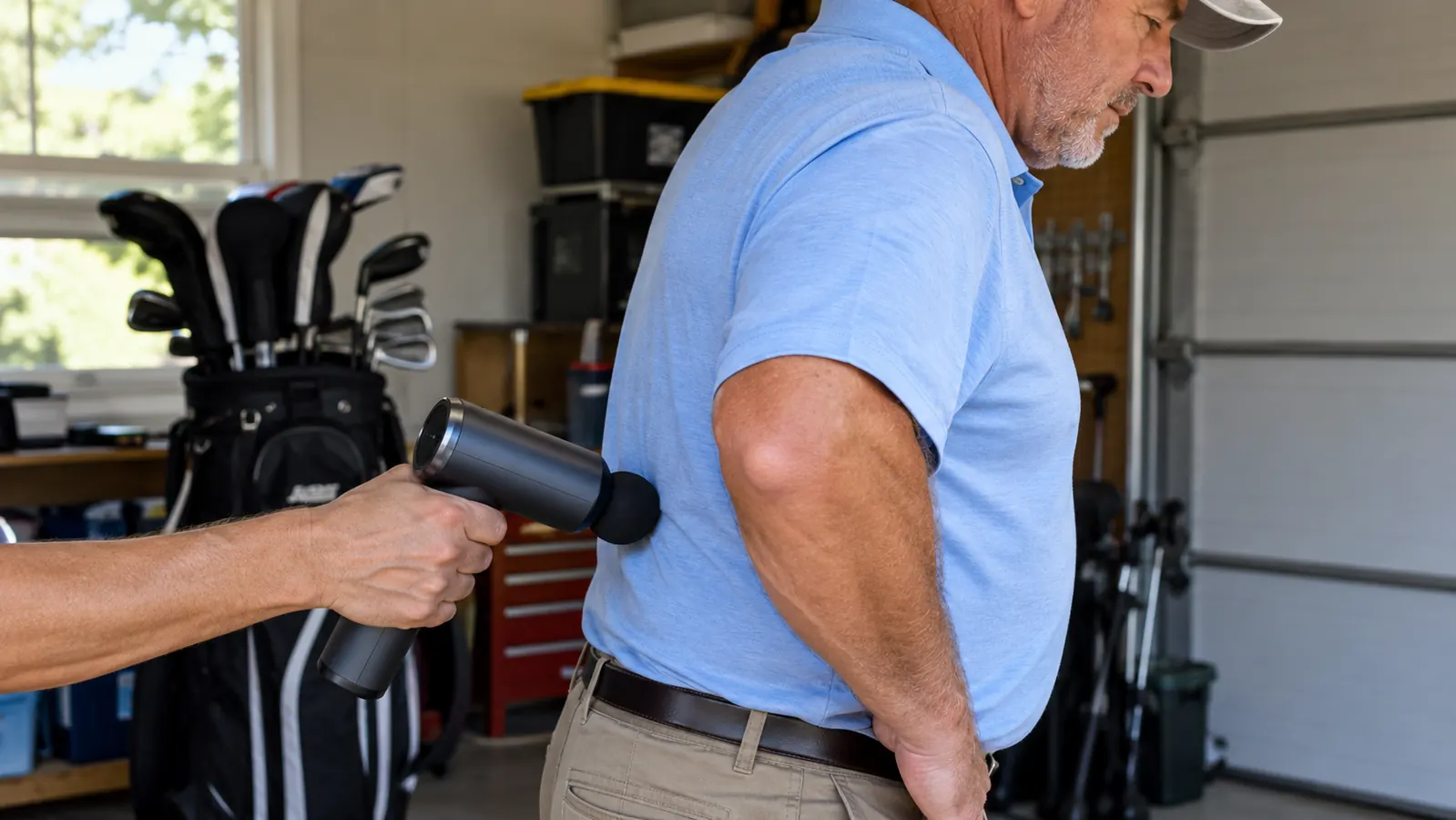
This is the order that changed everything for me. I start seated on the edge of the foam mat and work the glutes on each side for about a minute. Sitting takes the weight off the lower back and lets the glute muscles relax instead of bracing. It feels odd at first, working a muscle that is not the one that hurts, but it is the one doing the most work during the swing.
After the glutes, I switch to the lower back, still seated, working up and down the sides of the spine without going directly over the bone. I use the head that spreads the pressure over a wider area. On a bony spot like the lumbar, a broad contact patch beats a narrow one every time. The foam roller still gets used once in a while, but the gun reaches the spots the roller cannot put weight on, and it does it without me lying on the garage floor.
The whole pass takes about five minutes. Two minutes on the glutes, three on the lower back, split between the two sides. I do it in the garage with the hitting net in front of me, and half the time Birdie, our yellow Lab puppy, comes over to investigate the noise and then loses interest and goes back to her bone.
Step 4: Keep Each Pass Short and Keep Moving
The temptation with a massage gun is to treat it like a project. Ten minutes here, ten minutes there, really go after the tight spot until it gives up. I have done that. The result is a back that is more sore the next day than it was before I started. There is a line between working out a knot and beating up the tissue, and it is easy to cross.
The routine that works for me is short and consistent. Five minutes after a round, maybe ten on a day I hit a bucket of range balls. The goal is not to fix everything in one session. It is to keep the stiffness from building up over the week, the way it used to before I had the gun. A little bit every other day beats a big session once a month, and it is easier to stay honest about.
Consistency beats intensity. Ten minutes three times a week has done more for my back than one heroic forty-five minute session ever did. That is the part nobody tells you about recovery tools. The tool is easy. The discipline is the hard part. The long-term review covers how the gun has held up under all this, and the short version is that it keeps taking the abuse.
Step 5: Finish With a Stretch and Know When to Stop
When the gun is done, I stand up and do one simple stretch. I bend forward slowly, let my arms hang, and breathe for thirty seconds. That is it. Nothing fancy. The massage loosens the tissue, and the stretch tells the muscles where the new range of motion lives. Skipping this step makes the gun work half as hard. The stretch is also how I check whether I overdid it. If I cannot bend forward without pain, I did too much.
The other half of knowing when to stop is knowing when this tool is not the answer. If the stiffness turns into sharp pain, or if anything goes numb, the massage gun is not the fix. That is the point where I put the gun down and call the clinic. The gun is for the dull, achy stiffness that comes with age and a lot of golf swings. It is not a substitute for medical care, and I would not want anyone reading this to treat it like one.
I also do not use it on the day of a round if the back is already angry. If I wake up stiff, I take a hot shower, move gently, and let the round go. Using the gun on an already irritated back is how I turned a two-day soreness into a five-day one.
What Else Helps
The massage gun is the centerpiece of my routine, but it is not the whole routine. The biggest change came from walking the course instead of riding. I use a push cart when my back allows, and those extra miles keep my back looser than any tool ever has. Linda walks nine holes with me some evenings, and those walks count double.
I also stopped standing flat-footed through the whole round. I lift my heels a little at address, I stretch between shots instead of leaning on the club, and I do not bend at the waist to pick up the ball. I squat. It looks a little odd, but my back does not care how I look. It cares about how I bend.
And I move around on the drive home. Stopping once to walk around the gas station for five minutes made a bigger difference than I expected. The stiffness that used to set in during the drive home is mostly gone now, and the gun has less work to do when I get back. For a quick rundown of why golfers keep one in the bag, the ten reasons list is a fast read.
One more thing. I put the gun on the workbench where I can see it, not in a drawer. Out of sight means out of mind, and a recovery tool that takes effort to find is a recovery tool that does not get used. Mine sits between the hitting net and the foam mat, and I use it a lot more now that it is out in the open.
The difference I notice is the morning after. The stiffness that used to take until noon to loosen up is mostly gone by the time I finish my coffee.

The Routine in One Paragraph
For the guy who skips ahead, here is the whole thing. Use the gun after the round, not before. Start on the lowest setting and move in slow circles. Do the glutes first, then the lower back. Keep each pass under two minutes per spot. Finish with a thirty second stretch. Do that three times a week and give it a month. That is the routine, and it is the closest thing to a guarantee I can offer without sounding like a salesman.
None of this is medical advice, and none of it is a substitute for seeing a professional when something feels wrong. What it is, is a practical routine from a guy who has spent ten years fighting a stiff lower back and finally found a tool that helps. The TOLOCO massage gun sits on the workbench in my garage now, between the hitting net and the foam mat, and it has earned its spot. If your back talks to you on the back nine the way mine used to, this routine is a good place to start. Give it a month before you decide it does not work for you. That is the same advice I would give over the fence to a neighbor.
Start Tonight, on the Lowest Setting
You do not need a big session. Two minutes on each side after your next round, then the stretch, and see how the next morning feels. The TOLOCO massage gun is on Amazon. Check today's price and decide for yourself.
Amazon Check Today's Price on Amazon →